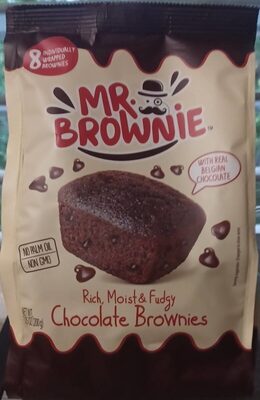
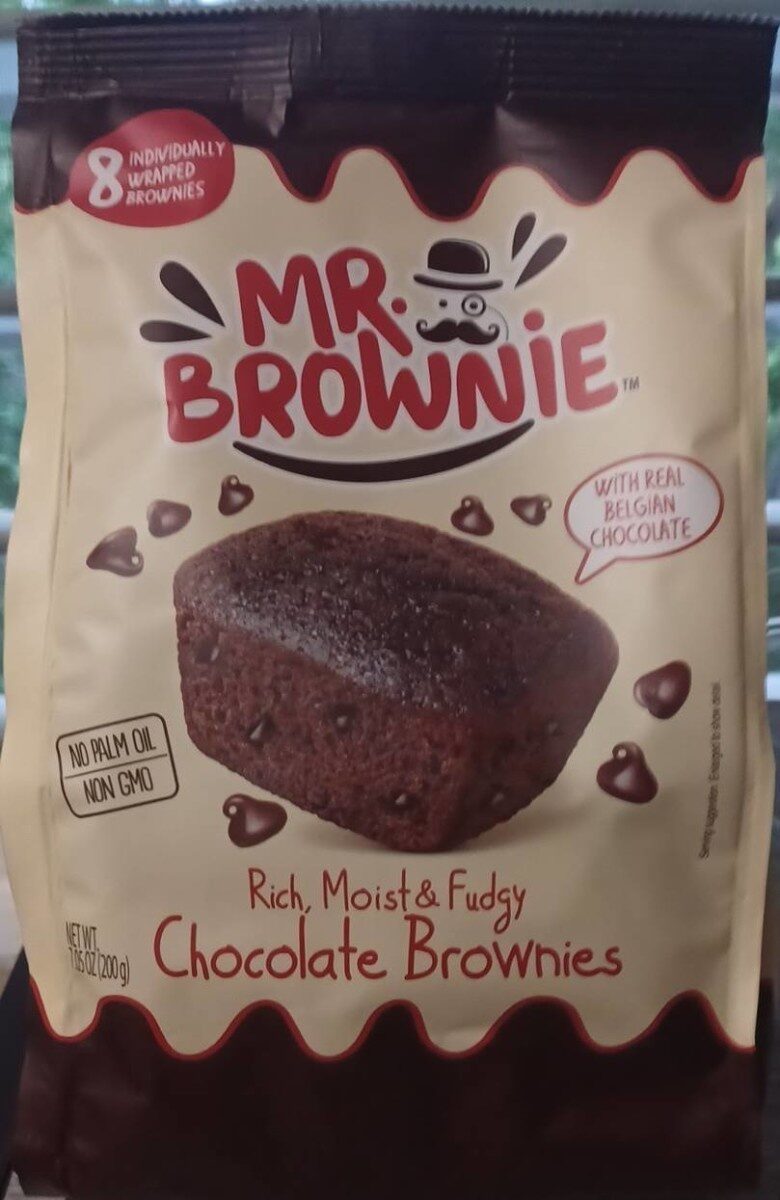
Chocolate Brownies - Mr. Brownie - 200g
Denne produktsiden er ikke fullstendig. Du kan hjelpe med å ferdigstille den ved å redigere den og legge til mere data fra bildene vi har, eller ved å ta flere bilder i appen for Android eller iPhone/iPad. Takk!
×
Strekkode: 8411037800037 (EAN / EAN-13)
Mengde: 200g
Emballasje: en:Plastic
Merker: Mr. Brownie, Magdalenas Lázaro
Kategorier: en:Snacks, en:Sweet snacks, en:Biscuits and cakes, Kake, en:Chocolate cakes, en:Brownies
Etiketter, sertifiseringer, priser:
Halal, Grønt Punkt, en:Made in Spain

Butikker: Woolworths, Kiwi
Land hvor produktet selges: Australia, Frankrike, Norge, Spania
Samsvarer med dine preferanser
Helse
Ingredienser



Matprosessering
-

Ultrabearbeidede matvarer
Elementer som indikerer at produkter er i en:4 - Ultra processed food and drink products-gruppen:
- Tilsetningsstoff: E322 - Lecitiner
- Tilsetningsstoff: E420 - Sorbitol
- Tilsetningsstoff: E450 - Difosfater
- Tilsetningsstoff: E477
- Ingrediens: Dekstrose
- Ingrediens: Aroma
- Ingrediens: Glukose
- Ingrediens: Glukosesirup
Matvarer er inndelt i 4 grupper i henhold til bearbeidingsgraden:
- Ubearbeidet eller minimalt bearbeidet mat
- Bearbeidede kulinariske ingredienser
- Bearbeidet mat
- Ultrabearbeidede matvarer
Bestemmelsen av gruppa er basert på kategorien til produktet og på ingrediensene den inneholder.
Tilsetningsstoffer
Analyse av ingredienser:
-

en:Palm oil content unknown
Ugjenkjente ingredienser: en:wheat-flour-emulsifier, en:vegetable-g-propylene-glycol-esters-of-fatty-acids, en:preservatiodium-propionate, en:acid-agent, en:citnic-acid-natural-vanilla-flavorNoen ingredienser kunne ikke gjenkjennes.
Vi trenger din hjelp!
Du kan hjelpe oss med å gjenkjenne flere ingredienser og bedre analysere ingredienslista for dette produktet og andre ved å:
- Rediger denne produktsiden for å korrigere skrivefeil i ingredienslista, og/eller for å fjerne ingredienser på andre språk og setninger som ikke er knyttet til ingrediensene.
- Legg inn nye oppføringer, synonymer eller oversettelser til våre flerspråklige ingredienslister, ingrediensbearbeidingsmetoder, og etiketter.
Bli med i kanalen #ingredients på vårt Slack-samtalested og/eller lære om ingrediensanalyse på wikien vår, hvis du ønsker å hjelpe til. Tusen takk!
-

en:Non-vegan
Ikke-veganske ingredienser: EggNoen ingredienser kunne ikke gjenkjennes.
Vi trenger din hjelp!
Du kan hjelpe oss med å gjenkjenne flere ingredienser og bedre analysere ingredienslista for dette produktet og andre ved å:
- Rediger denne produktsiden for å korrigere skrivefeil i ingredienslista, og/eller for å fjerne ingredienser på andre språk og setninger som ikke er knyttet til ingrediensene.
- Legg inn nye oppføringer, synonymer eller oversettelser til våre flerspråklige ingredienslister, ingrediensbearbeidingsmetoder, og etiketter.
Bli med i kanalen #ingredients på vårt Slack-samtalested og/eller lære om ingrediensanalyse på wikien vår, hvis du ønsker å hjelpe til. Tusen takk!
-

en:Vegetarian status unknown
Ugjenkjente ingredienser: en:wheat-flour-emulsifier, en:vegetable-g-propylene-glycol-esters-of-fatty-acids, en:preservatiodium-propionate, en:acid-agent, en:citnic-acid-natural-vanilla-flavor, Jernsulfat, FolsyreNoen ingredienser kunne ikke gjenkjennes.
Vi trenger din hjelp!
Du kan hjelpe oss med å gjenkjenne flere ingredienser og bedre analysere ingredienslista for dette produktet og andre ved å:
- Rediger denne produktsiden for å korrigere skrivefeil i ingredienslista, og/eller for å fjerne ingredienser på andre språk og setninger som ikke er knyttet til ingrediensene.
- Legg inn nye oppføringer, synonymer eller oversettelser til våre flerspråklige ingredienslister, ingrediensbearbeidingsmetoder, og etiketter.
Bli med i kanalen #ingredients på vårt Slack-samtalested og/eller lære om ingrediensanalyse på wikien vår, hvis du ønsker å hjelpe til. Tusen takk!
-

Detaljer fra analysen av ingrediensene
Vi trenger din hjelp!
Noen ingredienser kunne ikke gjenkjennes.
Vi trenger din hjelp!
Du kan hjelpe oss med å gjenkjenne flere ingredienser og bedre analysere ingredienslista for dette produktet og andre ved å:
- Rediger denne produktsiden for å korrigere skrivefeil i ingredienslista, og/eller for å fjerne ingredienser på andre språk og setninger som ikke er knyttet til ingrediensene.
- Legg inn nye oppføringer, synonymer eller oversettelser til våre flerspråklige ingredienslister, ingrediensbearbeidingsmetoder, og etiketter.
Bli med i kanalen #ingredients på vårt Slack-samtalested og/eller lære om ingrediensanalyse på wikien vår, hvis du ønsker å hjelpe til. Tusen takk!
: sugar, sunflower oil, eggs, wheat flour emulsifier (soy lecithin), natural vanilla flavor, glucose syrup, cocoa powder, stabilizers (sorbitol, vegetable g propylene glycol esters of fatty acids), raising agents (sodium diphosphate, sodium bicarbonate), dextrose, preservatiodium propionate, wheat starch, acid agent, citnic acid natural vanilla flavor, ferrous sulfate, folic acid- sugar -> en:sugar - vegan: yes - vegetarian: yes - ciqual_proxy_food_code: 31016 - percent_min: 6.25 - percent_max: 100
- sunflower oil -> en:sunflower-oil - vegan: yes - vegetarian: yes - from_palm_oil: no - ciqual_food_code: 17440 - percent_min: 0 - percent_max: 50
- eggs -> en:egg - vegan: no - vegetarian: yes - ciqual_food_code: 22000 - percent_min: 0 - percent_max: 33.3333333333333
- wheat flour emulsifier -> en:wheat-flour-emulsifier - percent_min: 0 - percent_max: 25
- soy lecithin -> en:soya-lecithin - vegan: yes - vegetarian: yes - ciqual_food_code: 42200 - percent_min: 0 - percent_max: 25
- natural vanilla flavor -> en:natural-vanilla-flavouring - vegan: yes - vegetarian: yes - percent_min: 0 - percent_max: 5
- glucose syrup -> en:glucose-syrup - vegan: yes - vegetarian: yes - ciqual_proxy_food_code: 31016 - percent_min: 0 - percent_max: 5
- cocoa powder -> en:cocoa-powder - vegan: yes - vegetarian: yes - ciqual_food_code: 18100 - percent_min: 0 - percent_max: 5
- stabilizers -> en:stabiliser - percent_min: 0 - percent_max: 5
- sorbitol -> en:e420 - vegan: yes - vegetarian: yes - percent_min: 0 - percent_max: 5
- vegetable g propylene glycol esters of fatty acids -> en:vegetable-g-propylene-glycol-esters-of-fatty-acids - percent_min: 0 - percent_max: 2.5
- raising agents -> en:raising-agent - percent_min: 0 - percent_max: 5
- sodium diphosphate -> en:e450iii - vegan: yes - vegetarian: yes - percent_min: 0 - percent_max: 5
- sodium bicarbonate -> en:e500ii - vegan: yes - vegetarian: yes - percent_min: 0 - percent_max: 2.5
- dextrose -> en:dextrose - vegan: yes - vegetarian: yes - ciqual_proxy_food_code: 31016 - percent_min: 0 - percent_max: 5
- preservatiodium propionate -> en:preservatiodium-propionate - percent_min: 0 - percent_max: 5
- wheat starch -> en:wheat-starch - vegan: yes - vegetarian: yes - ciqual_proxy_food_code: 9510 - percent_min: 0 - percent_max: 5
- acid agent -> en:acid-agent - percent_min: 0 - percent_max: 5
- citnic acid natural vanilla flavor -> en:citnic-acid-natural-vanilla-flavor - percent_min: 0 - percent_max: 5
- ferrous sulfate -> en:ferrous-sulfate - percent_min: 0 - percent_max: 5
- folic acid -> en:folic-acid - percent_min: 0 - percent_max: 5
Ernæring
-

Svak ernæringskvalitet
⚠ ️Advarsel: mengden frukt, grønnsaker og nøtter er ikke spesifisert på etiketten, den ble anslått utfra ingredienslista: 0Dette produktet regnes ikke som en drikke under beregningen av Nutri-Score.
Positive poeng: 5
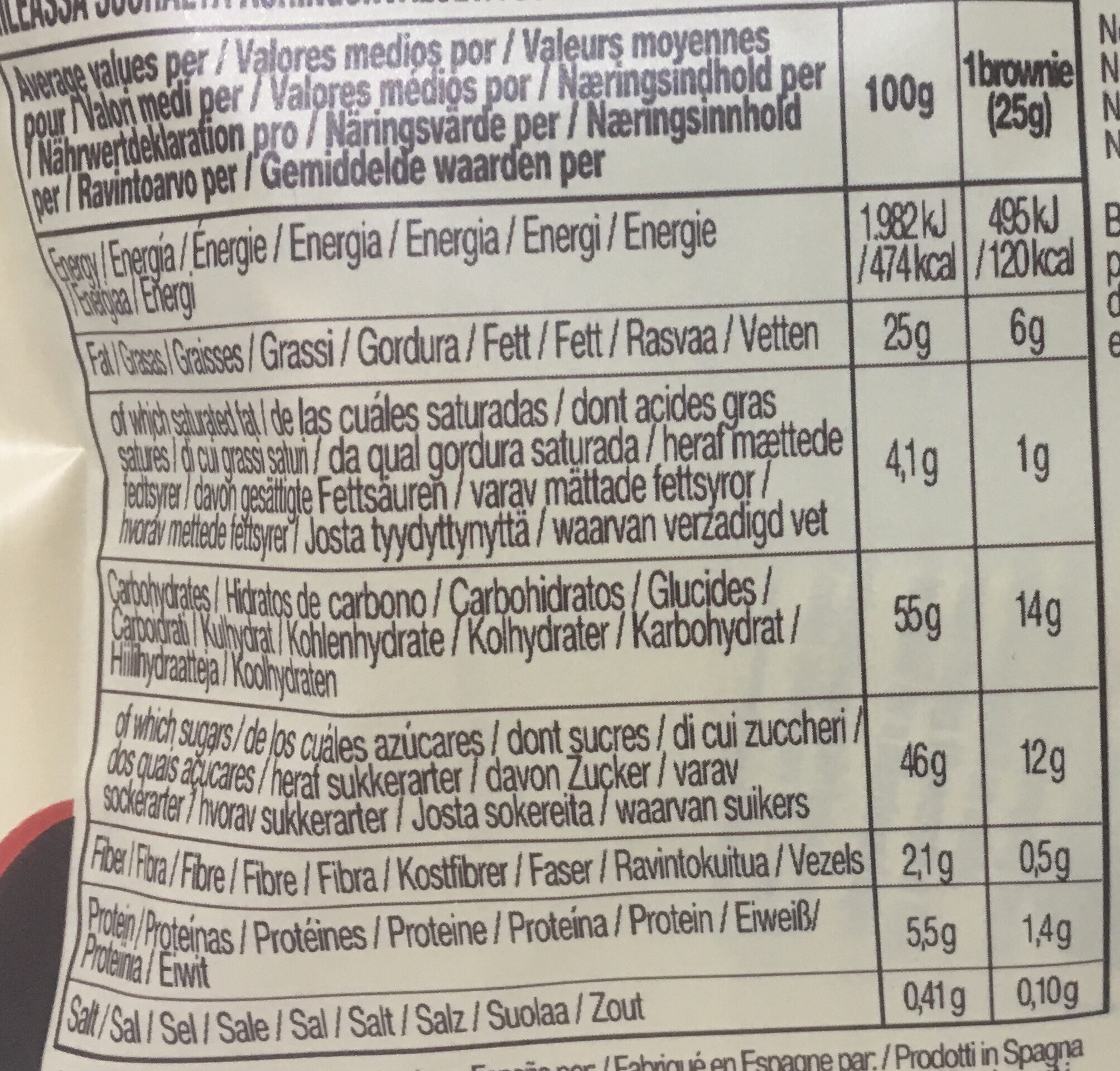
- Protein: 3 / 5 (verdi: 5.5, avrundet verdi: 5.5)
- Fiber: 5 / 5 (verdi: 21, avrundet verdi: 21)
- Frukt, grønnsaker, nøtter, og raps/valnøtt/olivenoljer: 0 / 5 (verdi: 0, avrundet verdi: 0)
Negative poeng: 20
- Energi: 5 / 10 (verdi: 1982, avrundet verdi: 1982)
- Sukker: 10 / 10 (verdi: 46, avrundet verdi: 46)
- Mettet fett: 4 / 10 (verdi: 4.1, avrundet verdi: 4.1)
- Natrium: 1 / 10 (verdi: 164, avrundet verdi: 164)
Poengene for proteiner telles ikke fordi de negative poengene er større eller lik 11.
Ernæringsverdi: (20 - 5)
Nutri-Score:
-

Næringsnivåer
-

Fett i høy kvantitet (25%)
Fint å vite- Et høyt inntak av fett, spesielt mettet fett, kan øke kolesterolet, som øker risikoen for hjertesjukdommer.
Anbefaling: Reduser inntaket av fett og mettet fett- Velg produkter med lavere fett- og mettet fettinnhold.
-

Mettet fett i moderat mengde (4.1%)
Fint å vite- Et høyt inntak av fett, spesielt mettet fett, kan øke kolesterolet, som øker risikoen for hjertesjukdommer.
Anbefaling: Reduser inntaket av fett og mettet fett- Velg produkter med lavere fett- og mettet fettinnhold.
-
Sukkerarter i høy kvantitet (46%)
Fint å vite- Et høyt inntak av sukker kan føre til økning i vekt og tannråte. Det øker også risikoen for diabetes type 2 og hjerte- og karsjukdommer.
Anbefaling: Begrens inntaket av sukker og sukkerholdige drikker- Sukkerholdige drikker (som brus, fruktdrikker, og fruktjuicer og nektar) burde begrenses så mye som mulig (ikke mer enn 1 glass om dagen).
- Velg produkter med lavt sukkerinnhold og reduser inntaket av produkter med tilsatt sukker.
-
Salt i moderat mengde (0.41%)
Fint å vite- Et høyt inntak av salt (eller sodium) kan føre til et økt blodtrykk, som kan føre til høyere risiko for hjertesjukdom og slag.
- Mange folk har høyt blodtrykk uten å vite det, siden det ofte ikke er noen symptomer.
- De fleste inntar for mye salt (i gjennomsnitt 9 til 12 gram per dag), cirka det dobbelte av den anbefalte høyeste mengden av inntak.
Anbefaling: Begrens inntaket av salt og saltet mat- Reduser mengden salt som brukes ved matlaging, og ikke salt igjen ved bordet.
- Begrens inntaket av salte snacks og velg produkter med lavere saltinnhold.
-


Miljø
-

Eco-Score D - Høyt miljøavtrykk
Eco-Scoren er en eksperimentell poengsum som oppsummerer miljøavtrykket til matprodukter.→ Eco-Scoren ble opprinnelig utviklet for Frankrike og den blir nå utvidet til andre europeiske land. Eco-Score-formelen er i stadig endring og forbedres jevnlig for å gjøre den mer presis og bedre egnet til hvert land.Livssyklusanalyse
-

Gjennomsnittlig avtrykk for produkter i samme kategori: C (Score: 44/100)
Kategori: Brownie (chocolate cake)
Kategori: Brownie (chocolate cake)
- PEF-miljøscore: 0.66 (jo lavere poengsum, jo lavere avtrykk)
- inkludert innvirkning på klimaendringer: 7.28 kg CO2-ekv./kg produkt
Trinn Påvirkning  Landbruk
61.5 %
Landbruk
61.5 % Bearbeiding
32.6 %
Bearbeiding
32.6 % Emballasje
2.9 %
Emballasje
2.9 % Transport
2.4 %
Transport
2.4 % Distribusjon
0.7 %
Distribusjon
0.7 % Forbruk
0.0 %
Forbruk
0.0 %
Fordeler og ulemper
-

Mangler ingrediensopprinnelsesinformasjon
Ulempe: -5
⚠ ️ Opprinnelsen til ingrediensene til produktet er ikke angitt.
Hvis det er indikert på emballasjen, kan du redigere produktsiden og legge det til.
Hvis du er produsenten av produktet, kan du sende oss informasjon gjennom vår gratis plattform for produsenter.
-
Emballasje med høyt avtrykk
Ulempe: -15
Form Material Resirkulering Påvirkning 1 Bag Plastic Høy 8 Wrapper Plastic Høy 8 Sleeve 22 PAP Lav ⚠ ️ Informasjonen om emballasjen til dette produktet er ikke tilstrekkelig presis (eksakte former og materialer av alle komponenter i emballasjen).⚠ ️ For en mer presis beregning av Eco-Scoren, kan du modifisere produktsiden og legge dem til.
Hvis du er produsenten av produktet, kan du sende oss informasjon gjennom vår gratis plattform for produsenter.
Eco-Score for dette produktet
-
Avtrykk for dette produktet: D (Score: 24/100)
Produkt: Chocolate Brownies - Mr. Brownie - 200g
Livssyklusanalysescore: 44
Sum av fordeler og ulemper: -20
Endelig poengsum: 24/100
-

Carbon footprint
-

Likt som å kjøre 3.8 km i en bensinbil
728 g CO² per 100g produkt
Karbonutslippstallet kommer fra ADEME's Agribalyse database, for kategorien: Brownie (chocolate cake) (Kilde: Ademe Agribalyse Database)
Trinn Påvirkning
Landbruk
39.4 %
Bearbeiding
54.0 %
Emballasje
4.0 %
Transport
2.4 %
Distribusjon
0.3 %
Forbruk
0.0 %
Emballasje
-
Emballasje med høyt avtrykk
-
Emballasjedeler
 1 x Bag 8 (Plastic: 8 g)
8 x Wrapper 1 (Plastic: 0.875 g)
8 x Sleeve 1 (22 PAP: 2 g)
-


Transport
-
Opprinnelsen til ingredienser
Mangler ingrediensopprinnelsesinformasjon
⚠ ️ Opprinnelsen til ingrediensene til produktet er ikke angitt.
Hvis det er indikert på emballasjen, kan du redigere produktsiden og legge det til.
Hvis du er produsenten av produktet, kan du sende oss informasjon gjennom vår gratis plattform for produsenter.Legg til opprinnelsen til ingrediensene i dette produktet Legg til opprinnelsen til ingrediensene i dette produktet

Datakilder
Produkt lagt til av kiliweb
Siste redigering av produktsiden den av inf.
Produktside også redigert av archanox, desan, ecoscore-impact-estimator, elcoco, gluten-scan, musarana, odinh, openfoodfacts-contributors, roboto-app, scanbot, thaialagata, yuka.UmI4QklxSXRoZHNTdnN3M3h4Yjg0Zk5uNnJHQVpUcXhEL01mSVE9PQ, yuka.V1k0bk5mdGQrUElKdWMwMDQwNkZxdkozeUxDWUIwT0tkZFVLSWc9PQ, yuka.sY2b0xO6T85zoF3NwEKvlhEWeuuDr2noOkHgxE22wPCUMba2R95N-NXGOqs, yuka.sY2b0xO6T85zoF3NwEKvll1VUPjwvwPfbTbfgmeMy_SRJa33TthfvrjIb6o, yuka.sY2b0xO6T85zoF3NwEKvlmdXWOr6phTGZyLlu3-FwdzWA8zmbOxrzYvibqs, yuka.sY2b0xO6T85zoF3NwEKvlnBnbOiBixP2biPTnXPbnIaAf47vOONz2a_8OKs.